10 Days Lhasa Namtso Lake Tour with Tsurphu to Yangpachen Trek
Would you like to do a light trekking tour around Lhasa? As one of the Top 20 Tibet Trekking Routes in China, this Tibet adventure tour will challenge you from an altitude of 3650m (Lhasa) to 4700m (N
🗓️ 10 Days / 9 Nights 👥 Private 🌐 英语导游 ⭐ 4.8/5 (82 条评价)
行程亮点
✓ Lhasa Arrival | Pick-up Service & Hotel Check-in
✓ Lhasa City Tour | Jokhang Temple, Sera Monastery, Barkhor Street, Tibetan-style Featured Dinner
✓ Lhasa City Tour | Potala Palace, Drepung Monastery
✓ Driving from Lhasa to Tsurphu Monastery (4,500m), 79km, 2-3 Hours
✓ (Trekking Day 1) Trekking from Tsurphu Monastery to Leten (5090m), 11km, 5-6 Hours
✓ (Trekking Day 2) Trekking from Leten to Bartso (4,950m), 15km, 7-8 Hours
详细行程
D1 Lhasa Arrival | Pick-up Service & Hotel Check-in
Tashi Delek! Welcome to Lhasa, the capital of the Tibet Autonomous Region! Upon your arrival at the airport in Lhasa, the tour guide and driver will meet you at the exit, and then escort you to the hotel in downtown Lhasa (100km, about 1.5 hours’ drive) . You can have a good rest to get used to the altitude (3,650m) in your hotel and get ready to explore Lhasa with your guide the next day. Lhasa is located in the southern part of the Tibetan Plateau and southwestern China. Traveling to Tibet is convenient by air, railway, or road. There are five airports in Tibet, with Lhasa Gonggar Airport being the most popular for flights from Chengdu (which is also popular), Chongqing, Xian, Beijing, Shanghai, Guangzhou, Kunming, Xining, Shangri-La, and other cities. One international airline even connects Lhasa and Kathmandu. Moreover, travelers can take the train to Lhasa from Xining (21 hours, the starting point of the Qinghai-Tibet Railway), Lanzhou (24.5 hours), Chongqing (35.5 hours), Chengdu (36.5 hours), Xian (31 hours), Beijing (40.5 hours), Shanghai (47 hours), Guangzhou (52.5 hours), Shigatse (2.5 hours), Nyingzhi (4 hours), and other cities.Kind Reminds: 1.It is good to avoid altitude sickness by slowing down, keeping warm, drinking water frequently, avoiding showers for the first one or two days, taking it easy, and sleeping well.2.You should always follow your doctor's advice regarding altitude based on your health condition.3.Be sure to let your guide or the hotel staff know whenever you feel unwell or need help. The people there are always willing to help and are good at dealing with altitude sickness.Notes for Trekking: During your initial two days in Lhasa, Tibet, it is important to take it easy and dedicate ample time to acclimate to the elevated altitude. This is a crucial step in preparing yourself for the trek ahead.
D2 Lhasa City Tour | Jokhang Temple, Sera Monastery, Barkhor Street, Tibetan-style Featured Dinner
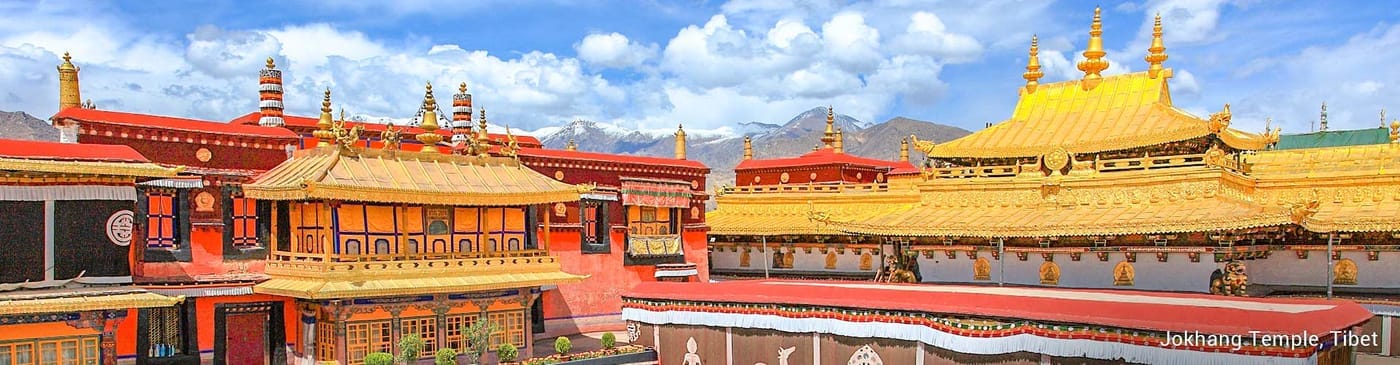
Today, you and your group will explore Lhasa by visiting Jokhang Temple, a world cultural heritage site renowned for its brilliant architecture, culture, art, and history. After that, you will experience Tibetan Buddhism by witnessing the Monks' Debating in Sera Monastery. Finally, you can stroll through the famous Barkhor Street with locals and learn more about the daily kora life of Tibetans.Located in the heart of Lhasa for over 1300 years, the Jokhang Temple is an important pilgrimage site for Buddhists from all over the world. Famed as the spiritual center of Tibet, it is said that the Jokhang Monastery was built for King Songtsen Gampo's two brides: Chinese Princess Wencheng and Nepalese Princess Bhrikuti. "Jokhang" means "House of Buddha", and it houses a life-size statue of the 12-year-old Sakyamuni, which is considered a treasure of the Buddhist world. This is why Buddhist pilgrims consider it the holiest destination. The Jakhong temple is also renowned for its beautiful architecture. You can admire the intricate carvings, colorful murals, ornate decorations, and details of the building, which is a masterpiece of Tibetan architecture. Time seems to stand still as you watch people pray in front of the temple during the day and night. (Please note that the visit order may be adjusted based on the reservation of your Jokhang Temple Ticket Reservation.)In the afternoon, drive approximately 30km (50 minutes) to visit Sera Monastery, which is one of the three great Gelug university monasteries of Tibet. It offers the opportunity to experience Tibetan Buddhism up close. The highlight of Sera Monastery is watching the monks' debate, which takes place around 15:00-17:00 (except on Sundays). The debate is an interesting form of exchange, where one monk acts as the questioner, standing while the answerer or group of answerers sit. The standing monk asks questions and slaps his palms and stomps, each action having a special meaning, such as activating wisdom, and are not meant to be aggressive. You will also have the chance to attend prayer ceremonies, visit meditation halls, and learn about the monastic way of life. It is a must-visit destination to gain insight into the beliefs and practices of Tibetan Buddhism.Afterward, head back to downtown Lhasa for a walk on busy Barkhor Street near the Jokhang Monastery, which was a place for Buddhists to do a kora (pilgrim circuit) in ancient times. Nowadays, it has become a thriving local market where you can drink a pot of yak butter tea, dress in Tibetan clothes for photos, and pick up some local Tibetan, Nepalese, and Indian handicrafts and souvenirs.
D3 Lhasa City Tour | Potala Palace, Drepung Monastery
Today you will explore the world’s highest palace for its brilliant architectures, culture, and history, then visits to one of the "great three" Gelug university monasteries in Tibet - the Drepung Monastery.In the morning, you can walk into Potala Palace (World Heritage), the traditional residence and winter palace of the Dalai Lama (1649-1959). It takes 365 steps from potala gate to reach the Red Palace which is the highest palace in the world at an altitude of 3,700m. Through the principal halls, chapels, and shrines of past Dalai Lamas in the Red Palace, you will be astonished and touched by its remarkable paintings, gorgeous jeweled works, skilled carving, colorful ornamentation, and the mystery stories behind the treasures. Inside the Potala Palace you will meet lots of Tibetan pilgrims who come all the way from afar to this sacred site to pray as their life time destination. You can also ask your guide to share more information about Songtsen Gampo, the 33rd king of Tibet, who first build the Potala Palace in the 7th century for his marriage to Princess Wencheng of the Tang Dynasty. (Note: We may adjust the visit order due to the visiting time of your Potala Palace Ticket. All visitors must visit the Potala Palace with a tour group while staying inside for an hour. No photo inside.)Then, drive about 35 minutes (12km) to visit the Drepung Monastery, which was the largest Tibetan monastery (of the Gelug Sect) in Lhasa. It used to be the palace of the Dalai Lama before he moved to the Potala Palace in the 17th century. Today, it is famous for the Drepung Shoton Festival held each August, where people come to offer yogurt to the monks who have finished their 100 days of meditation. You can also witness the grandest Buddha/Thangka Unfolding Ceremony. Besides the unique architecture and amazing buildings, you can watch monks debating in Tibetan Buddhism, which is vibrant and active with expansive gestures, clapping, and stamping. After visiting the Drepung Temple, you will have about a 2-hour Tibetan culture tour, which includes an introduction, Tibetan incense making, and block printing.
D4 Driving from Lhasa to Tsurphu Monastery (4,500m), 79km, 2-3 Hours
Camping Altitude: 4500m | Distance: 79km | Duration: 2-3 hours’ driveOn this day, drive about 2-3 hours (79km) from Lhasa to Tsurphu Monastery (4,500m) via the Qinghai-Tibet Highway. The road to the monastery is picturesque, winding its way through lush green valleys. Along the mountain river, you will pass many Tibetan camping tents.In the afternoon, you can pay a visit around the Tsurphu Monastery, have a good rest and get used to the altitude. After that, camp at the back of Tsurphu Monastery. We will prepare for the dinner.The Tsurphu to Yangpachen Trek is a well-known, mature trekking route in Tibet that starts from Tsurphu Monastery. This route is medium difficulty and perfect for those who enjoy hiking but are not experts. You will be supported by a Tibetan local guide, an experienced porters, and hard-working yaks or horses.Lies deep in the valley, Tsurphu Monastery is located 76 kilometers from Lhasa at an altitude of 4,500 meters. Dating back to the 11th century (over 800-year-old), it is a gompa that served as the traditional seat of the Karmapa, the head of the Karma Kagyu lineage of Tibetan Buddhism. Every year, during the 9th, 10th, and 11th days of the 4th Tibetan month (around May), people come to celebrate the Saga Dawa festival by performing ritual cham dancing and unfurling a great Thangka on the platform across the river from the monastery. Tsurphu Monastery is the place where the living Buddha reincarnation system of Tibetan Buddhism began. Now it is also the residence of the current living Buddha Karmapa, the reincarnated lama of the Kyigyapa sect of Tibetan Buddhism.Notes for Tsurphu to Yangpachen Trek:Late May to early October is the best season to do the Tsurphu to Yangpachen Trek. During this season, the weather is good and warm while avoiding snow that blocks the road.It is advisable to avoid coming during the rainy season in July and August, as the roads can be muddy and difficult to navigate.Due to the high altitude, it is advisable to undergo a physical examination before traveling to Tibet.There is a significant temperature difference between day and night in Tibet, and the ultraviolet rays can be very strong. Therefore, it is important to bring warm clothes and sunscreen to protect yourself from the harsh weather conditions.
D5 (Trekking Day 1) Trekking from Tsurphu Monastery to Leten (5090m), 11km, 5-6 Hours
Camping Altitude: 5090m | Distance: 11km | Duration: 5-6 hours’ trekkingThe first day of trekking will take about 4 hours to cover 11km and reach Leten, a small village at an altitude of 5,090m. During the trek, you will be able to appreciate the breathtaking scenery and capture the typical beauty of Tibet landscapes.The trek will begin with a climb up the green valley to the west of Tsurphu Monastery, following the Kora trail which is surrounded by trees and mountain streams. The rocky hills along the route are home to herds of mountain goats, which are disguised among the gray rocks. During the summer, you may see nomads camping for herding. Why not stop for a break and stop for a cup of yak butter tea in a local people’s yak-hair tent? A visit to their tents can help you to learn more about Tibetan nomads’ daily life. Also, the piles of Marnyi stones (Mani stones carved with mantras) scattered in valleys are great spots to take a rest. After passing by the mani walls, you will reach some rock house structures that are used by seasonal nomadic families and their livestock. Set up your tents in a quiet area below Leten.Dining Arrangements: Your group will be well taken care of with breakfast, lunch, and dinner carefully prepared by Asia Odyssey Travel.
D6 (Trekking Day 2) Trekking from Leten to Bartso (4,950m), 15km, 7-8 Hours
Camping Altitude: 4950m | Distance: 15km | Duration: 5 hours’ trekkingThe second day of trekking will take about 5 hours to cover 15km and reach Bartso, a nomads village at an altitude of 4,950m. The highlight of today’s trek will be reaching the Lasar-la Pass at 5,300m, which is the highest point of this trek.Depart from Leten Village and walk steeply up over the first small pass, the Damchen Nyingtri Pass (cairn, 5270m) which will lead you to a fascinating valley with meandering streams. The prayer flags and cairns there can bring you the peace and you can enjoy the beauty of nomads life on the high plateau along the way. Three hours later, you will cross the Lasar La Pass (5300m), and from there, you will have the first view of the wide-open Yangpache Valley. On the way down to the valley, you may have the chance to view the holy Mt. Nyenchen Thanglha Peak (7,162m, the local mountain god), on a clear day, its snow-capped peak is visible even in summer.This evening you will camp near Bartso, which is surrounded by juniper trees. By the way, the juniper trees are commonly used for incense all over the Tibetan world.Dining Arrangements: Your group will be well taken care of with breakfast, lunch, and dinner carefully prepared by Asia Odyssey Travel.
D7 (Trekking Day 3) Trekking from Bartso to Geda Village (4300m), 9km, 4-5 hours; Drive to Namtso (4,300m), 120 km, 2.5 hours
Camping Altitude: 3650m | Distance: 9km | Duration: 4-5 hours’ trekThe third day of trekking covers approximately 15km in about 4 hours, passing Dorje Ling Nunnery at an altitude of 4,474m. Today's highlights include meeting local nomadic herders as well as the nuns at Dorje Ling.Leaving the village of Bartso behind, you will continue your journey across a wide valley. Cresting a ridge, you will be rewarded with another breathtaking perspective of the Nyenchen Tanglha Range (7,162m). Revered as the holiest mountain in central Tibet, it is believed to bless the people dwelling in its shadow. Along the way, you may encounter young nomads herding yaks and sheep.Following the pass, the trail descends. As the altitude drops, the vegetation becomes denser, leading you into Geda Village for a cultural immersion experience. Situated on alpine meadows at approximately 4,300m, Geda Village offers a stark contrast to the rocky terrain and high passes of the previous two days. Here, lush green grass and babbling brooks reveal the rare, gentle side of the Northern Tibetan Plateau.Our driver will meet you at Geda Village. And take you to Namtso Lake area for accommodation.Note: Tibetan monasteries often close early in the afternoon. If the temple is closed upon arrival, we will not be able to enter the interior; this visit is subject to opening hours and is not guaranteed.Dining Arrangements: Your group will be well taken care of, with breakfast and lunch prepared by Asia Odyssey Travel.
D8 Namtso - Lhasa | Namtso Lake, Nyenchen Thanglha Mountain, Laken La Pass
This morning, enjoy the sunrise of the holy lake - Namsto Lake (4700m) and explore the Tashi Dor Island. Namtso Lake is a sacred lake in Tibetan Buddhism and one of the three holy lakes in Tibet, believed to be the residence of a Tibetan goddess. Surrounded by snow-capped mountains and vast grasslands, Namtso Lake (the highest saltwater lake in China) creates a breathtaking landscape, perfect for photography. The crystal-clear waters of the lake change color throughout the day, ranging from deep blue to turquoise and you can capture the various colors, Nyenchen Thanglha Mountain, and the Tibetan nomadic communities in your photos. It is said that Namtso Lake is the wife of Nyenchen Thanglha Mountain, they accompany with each other, inseparable. Take your time to explore Tashi Dor Island, the largest island in Namtso Lake, hike around the area, visit the monasteries, and enjoy the peaceful atmosphere.Next, drive back to Lhasa, passing the Laken La Pass (Laken Pass, 5190m) and stopping at a scenic spot to view the Nyenchen Thanglha Mountain Range (7162m) again. You may also have the chance to spot wild animals like Kiangs (wild donkeys), pikas, hares, and foxes, etc. Afterward, head back to your hotel in downtown Lhasa.Note: In winter, Namtso Lake may occasionally close due to heavy snow, and at that time, the itinerary will be adjusted as follows:Day 07: Return to LhasaDay 08: Lhasa - Ganden Monastery (Kora trekking) - Lhasa
D9 Lhasa Tour | Zhaji Temple, Drak Yerpa Temple with Meditation Caves
On this day, you will begin with a morning visit to Zhaji Temple (扎基寺, 5 km, a 30-minute drive). This small yet significant Buddhist temple is known as the only Wealth God Temple in Tibet. Its spiritual and bustling atmosphere will captivate you. What makes your visit truly special is the chance to witness a unique perspective on temple holiness, as numerous devotees come here to pray for wealth. The temple remains vibrant and lively, adding a distinctive charm to your Lhasa trip. The deity worshipped at Zhaji Temple is Zhaji Lhamo. According to legend, she was originally a Han Chinese goddess who followed a Tibetan monk to Tibet and eventually became the revered Goddess of Wealth. Marvel at her striking appearance, characterized by a black face, tongue sticking out, and chicken feet. When in Rome, do as the Romans do. You can catch the chance to offer liquor, present a traditional Hada, and pray in front of this sacred Wealth God. It's a wonderful opportunity to seek blessings of fortune, prosperity, and well-being. After the lively temple prayer scene, drive for one hour to Drak Yerpa Temple (扎叶巴寺). You will feel a stark contrast - the atmosphere is very quiet and peaceful. Known as the "Temple on the Cliff", Drak Yerpa Temple is located at an altitude of 4,400 to 4,885 meters. With a history spanning over 1,500 years, this temple belongs to the Nyingma sect (Red Sect) and is one of the four major retreat sites in Tibet. It was originally built by the Tibetan King Songtsen Gampo as a spiritual retreat for his beloved consort, Princess Mangsa Chizun. Upon arrival, you will need to hike slowly up the stone stairs to the temple, where you can enjoy the vibrant prayer flags and the breathtaking panoramic view of the entire valley. (Note: Pay attention to the changes in altitude and walk slowly at all times.) Along the way, you will pass by secret meditation caves used by Atisha, Songtsen Gampo, and Guru Padmasambhava. You will also visit the Jampa Buddha Hall, which enshrines the Jampa Buddha (Maitreya Buddha), the Buddha of the Future. To the right of the King’s Meditation Cave is the "Moonlight Cave", where Guru Padmasambhava once meditated. During his time teaching and meditating at Drak Yerpa, Guru Padmasambhava established the "108 Great Adepts' Meditation Caves," turning this site into one of the most renowned centers for tantric practice in ancient Tibet. After the tour, be transferred back to Lhasa for a good rest.
D10 Lhasa Departure | Hotel Check-out and Airport See-off
It is time to end your 10-day Tibet Trekking Tour. Your guide will escorts you to the airport/train station for your flight or high speed train to your next destination.Extension Ideas: If you prefer to travel longer in Tibet, you can extend your trip to other highlighted parts of Tibet, including Shigatse, Gyantse, Everest Base Camp and Mount Kailash. Thank you for choosing Asia Odyssey Travel for your Tibet tour, and we are always here working for you and hope to see you again for your next trip to China/Asia. Safe journey!
费用包含与不含
✅ 费用包含
- ✓ Hotel accommodation with daily breakfast
- ✓ Professional English-speaking guide
- ✓ All transportation per itinerary
- ✓ Entrance fees to listed attractions
- ✓ Airport transfers on arrival and departure
❌ 费用不含
- ✗ International flights
- ✗ Travel insurance
- ✗ Personal expenses and tips
- ✗ Visa fees (if applicable)