
Kunming Dali Lijiang Shangri-La Tour, 8 Days Yunnan Itinerary
Yunnan is the most diverse province in southwestern China. A journey to Yunnan is a journey into the colorful ethnic cultures of the region’s Bai, Yi and Naxi people, as well as the various splendor l
🗓️ 8 Days / 7 Nights 👥 Private 🌐 英语导游 ⭐ 4.8/5 (79 条评价)
行程亮点
✓ Kunming Arrival | Airport Pick-up and Hotel Check-in
✓ Kunming Tour | Stone Forest, Yuantong Temple (Zen Buddhist), Green Lake Park
✓ Kunming to Dali by High Speed Train | Three Pagodas of Chongsheng Temple, Erhai Lake Bike Ride, Free Time in Dali Ancient Town
✓ Dali - Lijiang | Xizhou Local Market, Xizhou Ancient Town, Zhoucheng Tie-dye, Free Exploration in Lijiang Old Town
✓ Lijiang Tour | Jade Dragon Snow Mountain (Spruce Meadow), Blue Moon Valley, Baisha Murals, Lijiang Old Town (Sifang Square)
✓ Lijiang - Shangri-La | First Bend of the Yangtze River (Observation Deck), Tiger Leaping Gorge (Upper Section)
详细行程
D1 Kunming Arrival | Airport Pick-up and Hotel Check-in
Welcome to Kunming, the Capital City of Yunnan Province! Upon arrival in Kunming, your guide will meet you at the airport/train station and escort you to your hotel. You can have a good rest to overcome the jet lag in your hotel. You can explore on your own based on your arrival time. Feel free to seek practical suggestions from your tour guide.Kunming is known as the "Spring City春城" due to its mild year-round climate, making it a popular destination for people from other cities to escape harsh winters or scorching summers. The pleasant climate also results in flowers blooming throughout the year, earning Kunming the nickname "Flower City花都". Kunming is the hometown of Zheng He (郑和1371-1433), the famous Ming Dynasty navigator who led seven voyages from 1405 to 1433, visiting numerous countries in Asia and Africa. Whether you're looking for a relaxing escape, cultural immersion, or a chance to explore breathtaking natural wonders and indulge in delicious Yunnan cuisine, Kunming has something to offer everyone.Free Time Ideas:1.Explore Yunnan's Diverse Minority Cultures at Yunnan Ethnic Village, Yunnan Museum of Minority (closed on Mondays), and enjoy the scenic views at Haigeng Park near Dianchi Lake (Meet Black-Headed Gulls from Siberia in winter).2.Enjoy a Kunming City Walk from Eastern and Western Pagodas (Landmarks in Kunming) to Jinma and Biji Archways (Symbols of Old Kunming), Kunming Flying Tigers Museum (Kunming Museum, Learn about a significant chapter in World War II), and Jingxing Flower and Bird Market (A calling card of the local life in Kunming).3.Unveil the Amazing Yunnan Food by visiting Daguan Zhuanxin Farmers' Market (all kinds of delicious flowers, mushrooms, ferns, insects, Ham, Rushan cheese, local snacks) and try Yunnan cuisine while strolling around Nanqiang Pedestrian Street (since the Qing Dynasty) and Nanping Pedestrian Street (a historic old street).Arrival Ideas:Kunming serves as the gateway city to start a Yunnan Tour. It is a convenient base for exploring nearby top destinations, such as Dali Ancient Town, Dongchuan Red Land, Jiangshui Ancient Town (Zhujia Garden), Yuanyang Rice Terraces (Honghe Hani Rice Terraces), Xishuanbanna, and more. You can choose to reach Kunming by Flight or By Bullet Train.By Air: Kunming Changshui International Airport (KMG) offers many direct international flights to destinations such as Laos (Vientiane), Thailand (Bangkok/Chiang Mai/Phuket), Vietnam (Hanoi/Ho Chi Minh), Cambodia (Siem Reap), Nepal (Kathmandu), India (Kolkata), Sri Lanka (Colombo), Japan (Tokyo), Malaysia (Kuala Lumpur), Singapore. There are many direct flights between Kunming and China’s Top Tourist Cities like Beijing, Shanghai, Xian, Chengdu, Hong Kong, and more. From Kunming, you can easily take a flight to top destinations in Yunnan, such as Lijiang, Dali, Shangri-la, & Xishuanbanna.By Train: Kunming is served by Kunming Railway Station and South Railway Station. There are many high-speed trains connecting Kunming to other cities in Yunnan, such as Dali (2.5hrs), Lijiang (4hrs), Xishuanbanna (3.5hrs), as well as other cities in China, including Guiyang (2hrs), Chongqing (4hrs), Chengdu (5.5hrs), Guangzhou (7hrs), Hong Kong (7.5hrs), Beijing(11hrs), Shanghai(11hrs), etc. Additionally, there is a Kunming to Vientiane train (China-Laos Railway) that takes approximately 10 hours.
D2 Kunming Tour | Stone Forest, Yuantong Temple (Zen Buddhist), Green Lake Park
This morning, drive 80km (1.5 hours) to the Stone Forest (a World Heritage Site of South China Karst) for a Kunming Excursion. Afterwards, return to downtown for a Classic Kunming City Tour, including visits to Yuantong Temple (a Zen Buddhist temple), Green Lake Park (Cuihu Park), and more, based on your available time and interests.In the morning, visit the Stone Forest (a World Heritage Site of South China Karst), a must-see natural wonder that was once submerged under an ancient sea. The Kunming Stone Forest (Shilin) is a national geological park famous for its unique stone forest scenery, which represents the magnificent transformations of the natural world over 270 million years (marine sedimentation → crustal uplift → volcanic lava coverage → erosion and leveling → formation of the Stone Forest). Within the Stone Forest, you can closely observe the traces left by the passage of time and gain an understanding of its distinctive karst landforms, rich geological history, and the accompanying Yi ethnic culture. A sightseeing bus will take you to explore the Big Stone Forest and Small Stone Forest. In addition to the touching legend of Ashima (阿诗玛, a symbol of Yi ethnic culture), the Stone Forest also served as a filming location for "Journey to the West" (1986 TV series西游记), where Sun Wukong (Monkey King) was depicted as being trapped under Wuxing Mountain (五行山). Use your imagination to discover the magical shapes of the stone forests.After that, you will head back to Kunming for Yuantong Temple. Located in the city center, Yuantong Temple combines tranquility amidst the bustling surroundings, offering a unique water courtyard temple. The temple has a history of over 1,200 years and is the oldest Guanyin Temple in China. Particularly noteworthy is its "Downhill Temple" design, where instead of ascending steps after entering the mountain gate, one descends gradually, creating a rare architectural feature among temples in China. Yuantong Temple is the only sacred place in the country that simultaneously accommodates the Han, Southern, and Tibetan Buddhist traditions. At the rear of the temple, there is a typical Southeast Asian Buddhist architectural structure called the Bronze Buddha Hall (铜佛殿), which was built in 1985 specifically to house a bronze statue of Shakyamuni Buddha presented by the Buddhist Association of the Kingdom of Thailand. It has gained a high reputation in the Southeast Asian area and attracts many pilgrims and locals to visit every year.Then, you can hike in Green Lake Park (Cuihu Park翠湖) which is 700m away from Yuantong Temple. Cuihu Park was once a marshy bay of Dianchi Lake, which later became a city lake during the Ming Dynasty. It earned its name from its "emerald waters on all sides, bamboo green in all seasons, willow green in spring and summer," and is renowned as the "green gem" and "jade within the city" of Kunming. Two embankments divide the lake into four parts. The north and south embankments, known as Ruandi (阮堤), were constructed during the reign of Emperor Daoguang by Governor Ruan Yuan, inspired by the Su Causeway in West Lake. The east and west embankments, called Tangdi, were built during the Republican era. Besides historical buildings and former residences of famous people, there is a sculpture of Nie Er (聂耳;1912-1935), one of the pioneers of modern Chinese music, who composed China's national anthem, "The March of the Volunteers". Today, Cuihu has become a place where locals take walks, feed fish, observe Black-headed Gulls migrating from Siberia during winter, enjoy lotus flowers, watch flower lanterns, dance, and savor life.Head back to your hotel and have a good rest at your hotel.Free Time Ideas:1. Kunming Old Street(1km from Cuihu Park), with a history of over 900 years, is the only remaining old street in Kunming that retains its ancient charm. Stroll on stone-paved roads, you can taste authentic Yunnan Rice Noodles (Yunnan Cross-bridge Rice Noodle云南过桥米线), explore fascinating Yunnan antiques & traditional medicine shops, visit the former residence of Nie Er (聂耳故居), and more old buildings.2. Yunnan Impression(云南印象) is a performance (one of the representative's works by Yang Liping杨丽萍, a renowned local dance artist from Yunnan) held at 8:00 p.m. It draws inspiration from the ethnic dance elements of various ethnic groups in Yunnan, such as Yi, Wa, Tibetan, Hani, Dai, Bulang, and Jinuo. It incorporates modern dance elements, showcasing the rich ethnic charm of Yunnan.
D3 Kunming to Dali by High Speed Train | Three Pagodas of Chongsheng Temple, Erhai Lake Bike Ride, Free Time in Dali Ancient Town
This morning, you will be escorted to the train station for a high speed train to Dali (about 2 hours). Upon your arrival at Dali train station, our local tour guide and driver will meet you at the exit. They will then escort you to visit the Three Pagodas of Chongsheng Temple, providing a deep insight into Dali's historical and spiritual heritage.The Three Pagodas of Chongsheng Temple (崇圣寺三塔景区), majestically set against the backdrop of the Cangshan Mountains and overlooking Erhai Lake, are the iconic symbol of Dali. The three pagodas (三塔), located at the front part of the complex, consist of one larger pagoda, known as Qianxun Pagoda about 69 meters high, flanked by two smaller ones. According to local legends, Dali was once a swamp inhabited by dragons that caused natural disasters, the Three Pagodas were built to deter the dragons. Take your time to closely observe the architectural details and the craftsmanship that have enabled these structures to stand tall and unyielding through the centuries. Don't miss the beautiful reflection pond in front of the pagodas, which provide stunning reflective views of the structures, perfect for photography.After visiting the pagodas, proceed to Chongsheng Temple (崇圣寺) just behind them. This temple once served as the royal temple of the Dali Kingdom of Nanzhao with the good reputation of being “the Capital of Buddhism”. It is also famous as Tianlong Temple in Jin Yong’s "Demi-Gods and Semi-Devils." As you follow your guide, you will explore various halls for worship, including the impressive Mahavira Hall, and enjoy the tranquil atmosphere of the temple grounds. From certain elevated points, you can enjoy sweeping panoramic views of the surrounding Cangshan Mountains and Erhai Lake.After lunch, continue your journey with a leisurely bike ride along the west side of Erhai Lake (洱海). The name "Erhai" translates to "Ear-shaped Sea," reflecting its unique shape. It is the second-largest highland lake in the country and a key feature of the Dali Bai Autonomous Prefecture. As you pedal along the well-maintained lakeside path, the stunning views of the expansive blue lake waters bordered by the majestic Cangshan Mountains will leave you in awe. Along the route, you'll encounter quaint Bai villages, lush green fields, and vibrant flowers. The bike path offers numerous spots for you to pause and soak in the beautiful views, perfect for capturing memorable photographs.After the tour, return to your hotel in Dali.Free Time Idea:In the evening, take the opportunity to independently explore the enchanting Dali Ancient Town (大理古城). As dusk settles, the town's vibrant night markets come alive. Unwind in one of the town's many cozy coffee shops or night bars. Dali Old Town, originally established during the Ming dynasty over 600 years ago, serving as the medieval capital of both the Nanzhao and Dali Kingdoms. Visitors can stroll through the ancient city and enjoy its unique sense of history and culture. The main streets of the ancient city, such as Renmin Road and Foreigner Street, have many well-preserved traditional Bai architecture and alleys to explore. Besides the Bai ethnic minority's traditional folk houses, the houses all with grey-green roof tiles, peculiar workshops, temples, schools, and churches with an antique flavor are scattered.
D4 Dali - Lijiang | Xizhou Local Market, Xizhou Ancient Town, Zhoucheng Tie-dye, Free Exploration in Lijiang Old Town
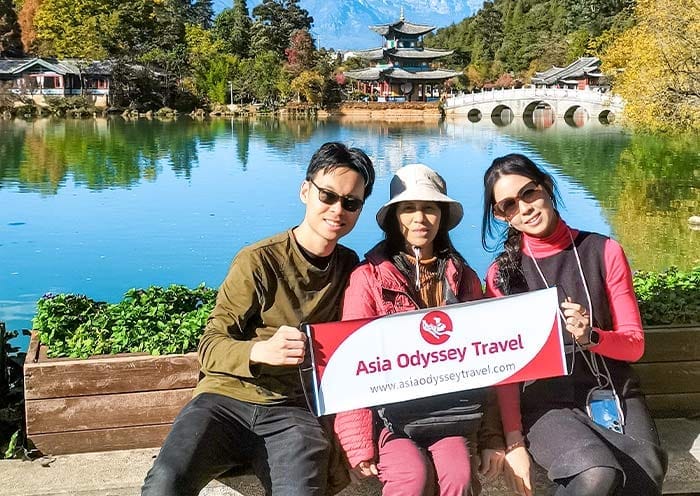
Start your delightful day by immersing yourself in the lively Xizhou Local Market (喜洲市场)! There's no better way to get under the skin of a place than by exploring its local market, here you can witness firsthand the local customs and mouth-watering dietary habits. This market has been a gathering spot for over a century where locals trade a wide array of goods - from farm-fresh produce and unique handicrafts to tantalizing local snacks. Yunnan, fondly known as the "Kingdom of Flora and Fauna," is a place where flowers and insects find their way into the local cuisine! Don't be surprised if you come across unfamiliar vegetables, fruits, and wild mushrooms. While you're there, don't miss your chance to try local favorites like Xizhou baba (a tasty stuffed pancake, savory or sweet) and a cup of freshly brewed Yunnan coffee.After exploring the market, take a walking tour of Xizhou Ancient Town (喜洲古镇), acclaimed as the "Premier Town of the Bai people" due to its exceptionally the largest and best-preserved cluster of Bai ethnic group's traditional dwellings. Xizhou Village is ideal for those seeking a more authentic and tranquil cultural experience of Bai life and traditions. As you wander through the village, visit some of the old mansions and Bai residences like Yan Family Compound (严家大院), you'll notice the most distinctive features of Bai architecture known as "Three-Room and One-Screen Wall (三房一照壁)" and "Siheyuan/Courtyard (四合院)”. These homes are adorned with exquisite details such as flying eaves, ornately carved wooden doors and beautifully painted walls typical of Bai aesthetics. Don't miss the "Three Courses of Tea" ceremony (三道茶), a Bai cultural practice you must experience. This tea ceremony, which transitions from bitter to sweet to an aftertaste, encapsulates the philosophy of "embraces hardship, values the sweetness that follows struggles, and reflects on the profound aftertastes that life experiences leave behind". In addition, Xizhou is surrounded by vast wheat fields, creating a striking contrast against the grey-and-white tones of the Bai minority dwellings. This harmonious coexistence with nature provides a healing, wonderful feeling. The beautiful scenery, especially in spring and autumn, draws tourists to appreciate Xizhou's charms.Next, make your way to Zhoucheng Village, which is just a short drive from Xizhou. Zhoucheng Village (周城), is often referred to as the “Hometown of Bai Embroidery ”. It is Bai people village, famous for its traditional tie-dye art (扎染), which has been preserved and passed down through generations. The Bai tie-dye technique has been listed as a National Intangible Cultural Heritage. Explore workshops within the village that showcase exquisite Bai embroidery. These pieces often depict traditional motifs such as lotus flowers, fish, and birds, which carry significant cultural symbolism. Engage with the local craftsmen and women, many of whom have inherited their skills from generations. If you're lucky, you may witness live demonstrations of Bai embroidery and tie-dye techniques. Optional Activity: If interested, participate in a hands-on workshop and craft your own tie-dye fabric under the guidance of expert artisans.Later, continue driving to Lijiang (about 140 kilometers, around 2 hours). Lijiang (丽江), nestled under the breathtaking Jade Dragon Snow Mountain, forms a beautiful and peaceful link between Shangri-La to the north and Dali to the south. A UNESCO World Heritage site named "Old Town of Lijiang", it's not only a living ancient town complex, encompassing Dayan, Shuhe, and Baisha, but also the heartland of the Naxi ethnic group, with about 74% of the population being Naxi. A visit to Lijiang allows you to enjoy endless snow-capped mountain views, appreciate the charming old town, experience the rich Naxi culture, and unwind in its peaceful atmosphere. The rest of today is free on your own to explore this old town. Free Time Ideas at Black Dragon Pond Park: On this day, you can explore on your own to Black Dragon Pond Park (黑龙潭公园), located at the northern edge of Lijiang Old Town. This picturesque location offers stunning views of the surrounding landscape, highlighted by the majestic Jade Dragon Snow Mountain. On clear days, the reflection of the snow-capped peak on the tranquil water of the Black Dragon Pool creates a breathtaking scene.
D5 Lijiang Tour | Jade Dragon Snow Mountain (Spruce Meadow), Blue Moon Valley, Baisha Murals, Lijiang Old Town (Sifang Square)
After breakfast, we will depart from Lijiang Old Town to visit Jade Dragon Snow Mountain (composed of 13 peaks). It is a UNESCO World Heritage site. It is a sacred mountain for the local Naxi people and is considered the embodiment of their deity, "Sanduo." The mountain is named for its appearance, which resembles a jade dragon, especially when its peaks are covered in snow during the winter. How to visit? We have selected the Spruce Meadow route for a relaxed experience. You will take cable car ride to an altitude of 3,240 meters. From there, you will walk on the plank road, through the spruce forest, view the mountain peak scenery. (Tip: This route is ideal as it avoids the physical demands, no high-altitude sickness.)Afterward, take a sightseeing bus to Blue Moon Valley (蓝月谷). The valley is a breathtaking sight, with its almost surreal turquoise blue water, reflecting the majestic Jade Dragon Snow Mountain in the background. This valley boasts four lakes and a White Water Terrace. Each lake presents unique scenery, but the most beautiful one is the Jade Liquid Lake. The best time to admire the splendor of Blue Moon Valley is during a sunny midday when the lake's water, under the radiant sunlight, becomes as clear and blue as a mirror. You can capture many awesome photos here. Optional Activity: Impression Lijiang" Show This AfternoonIf you're interested, you can choose to watch the Impression Lijiang show this afternoon at Ganhaizi (altitude: 3,100 meters). Directed by the renowned filmmaker Zhang Yimou, this magnificent open-air performance features singing and dancing that showcase the traditions and lifestyle of the local Naxi ethnic people. It lasts about one hour.Leaving the Jade Dragon Snow Mountain, you'll continue your journey to Baisha Village (白沙村), the birthplace of the Mu chieftaincy and the ancient capital of the Naxi ethnic group. Part of the UNESCO World Heritage Site "Old Town of Lijiang", Baisha Village offers a unique glimpse into the Naxi group’s rich history and culture. Here, you can visit the Baisha Murals (白沙壁画), showcasing a unique fusion of Buddhist, Taoist, and local Naxi religious elements, reflecting the diverse spiritual beliefs of the region. These murals are found within several temples, including the Dabaoji Palace, the Liuli Temple, and the Wenchang Palace.Later, you’ll have time to wander through Lijiang Old Town (Dayan Ancient Town), a UNESCO World Heritage Site that beautifully preserves the charm of an 800-year-old trading hub. The old town unfolds like a maze of cobblestone lanes lined with traditional wooden houses featuring sloping tiled roofs and carved eaves. Winding canals and stone bridges weave gracefully through the town. Enjoy the freedom to stroll at your own pace, take photos, or simply soak in the timeless charm of this enchanting ancient town. And, take a short walk to Sifang Street (四方街), the most famous square. Here, you can explore Naxi handicrafts, souvenirs, and local specialties, and soak up the vibrant atmosphere of bustling bars with lively music spilling out onto the streets.
D6 Lijiang - Shangri-La | First Bend of the Yangtze River (Observation Deck), Tiger Leaping Gorge (Upper Section)
After breakfast, you’ll depart from Lijiang to ShangriLa, exploring breathtaking natural landscapes along the way. Your first stop is the First Bend of the Yangtze River (长江第一湾), where the majestic river makes a dramatic 180degree turn from south to northeast within just one kilometer. You’ll get to the observation deck for sweeping views of the Yangtze River as it winds through the surrounding mountains. Continue your drive to the Upper Section of Tiger Leaping Gorge (上虎跳, altitude: 1,800 meters). According to legend, the gorge got its name when a tiger, chased by a hunter, made a legendary leap across its narrowest point, springing over the rushing Jinsha River (a main tributary of the Yangtze) at the base of the gorge. One of the deepest gorges in the world, Tiger Leaping Gorge offers a breathtaking vista of the roaring Jinsha River, letting you truly feel the power of nature. With Jade Dragon Snow Mountain (5,596m) and Haba Snow Mountain (5,386m) towering on each side, you’ll find yourself surrounded by strikingly diverse and beautiful landscapes. You’ll walk along the plank road, both ascending and descending. (Optional: To save energy, you may take the lift for an additional fee.) Afterward, continue your drive to Shangri-La (about 108 km, 2-2.5 hours). Welcome to Shangri-La (香格里拉)! Nestled in the northwestern part of Yunnan Province, within the Diqing Tibetan Autonomous Prefecture, this enchanting town - formerly known as Zhongdian - is regarded as the real-life ShangriLa. Inspired by the mythical paradise described in James Hilton’s novel Lost Horizon, ShangriLa truly lives up to its name. Surrounded by majestic mountains, it beckons travelers with landscapes steeped in mystery, Tibetan heritage, and fairytale beauty. Overnight in Shangri-La.
D7 Shangri-La Tour | Songzanlin Monastery, Pudacuo National Park, Tibetan Family Visit, Dukezong Ancient Town
This morning, our guide will take you to visit Songzanlin Monastery (松赞林寺, also known as Ganden Sumtsenling Monastery), a sprawling complex perched at an altitude of 3,380 meters. Founded in 1679 by the Fifth Dalai Lama, Songzanlin Monastery is the largest Tibetan Buddhist monastery in Yunnan Province. Inspired by the Potala Palace in Lhasa, it's often referred to as the "Little Potala Palace".The monastery's architecture is a fascinating fusion of Tibetan and Han Chinese styles. Currently, around 700 monks reside in its 200 associated houses. Ascend the steps and enter the monastery's three grand halls: Zhacang Hall (the central and highest hall), Jikang Hall (dedicated to Tsongkhapa), and Sakyamuni Hall (dedicated to Shakyamuni Buddha). Here, you'll witness Tibetan monks chanting and meditating, enveloped in the monastery's solemn atmosphere. The climb will be rewarded with a breathtaking panoramic view of the entire monastery complex and the beautiful Lamuyangcuo Lake.This afternoon, take a 25km drive (about 30 minutes) to Pudacuo National Park (普达措, also known as Potatso National Park), the first national park in China. Situated on the vast Tibetan Plateau and forming an important part of the "Three Parallel Rivers" scenic spot, the park is renowned for its pristine landscapes. Encompassing scenic hills, meadows, lakes, diverse plant life, and abundant bird species, the park is also home to over 100 endangered animals including leopards, cranes, macaques, and lynxes.Your journey begins with a sightseeing bus ride to Shudu Lake (altitude: 3,705 meters), the park's largest lake famed for its crystal-clear water and serene beauty. Take a leisurely hike around the well-maintained path suitable for most fitness levels. Afterwards, hop on a sightseeing bus to Bita Lake (altitude: 3,568 meters). A jewel nestled amidst the mountains and considered sacred by the local Tibetans, Bita Lake's turquoise waters and snow-capped backdrop create a picture-perfect scene. Take another short hike around the lake, a trail that leads you deeper into the heart of the park.As you make your way back to the hotel, to wrap up your day with a cultural immersion, visit a local Tibetan family and sample some local snacks and yak butter tea.Getting back to Shangri-La city, you'll visit Dukezong Ancient Town (独克宗古城), with over 1,300 years history, which is the best-preserved and largest Tibetan residential cluster in China. It holds the distinction of being the oldest castle along the Tea Horse Road. The name "Dukezong" translates to "Moonlight Castle built on a Stone" and it is also known as the City of Moonlight. Here, you will discover a world of traditional Tibetan houses, ancient temples, beautiful pagodas, and narrow, winding alleyways, all adorned with iconic Tibetan prayer flags of various colors. Take a hike up Guishan Hill and join the locals in turning the world's largest prayer wheel for good luck and happiness. From this vantage point, you can capture a breathtaking panoramic view of the entire town. Afterwards, wander through the distinctive alleys and immerse yourself in the rich tapestry of Tibetan culture.Optional Activities in the Evening:In the evenings around 19:00, you'll often see local Tibetans gathering in Sifang Square for a chance to participate in some traditional Tibetan dancing. As the evening deepens (around 21:00), the entire ancient town transforms with a warm glow as the lights come on, creating a truly charming atmosphere.After the tour, be escorted to your hotel in Shangri-La.
D8 Shangri-La Departure | Check-out & Transfer Service
After breakfast, it is time to end your 8 Days Kunming Dali Lijiang Shangri-La Tour. You will have some free time in Shangri-La and explore more on your own pace till your guide escorts you to the airport for your flight to next destination.Departure Ideas: Diqing Shangri-La Airport (DIG) is a smaller airport that offers domestic flights to cities like Chengdu, Chongqing, Lhasa, Guangzhou, and Shanghai. If you are looking to return home on an international flight, it is recommended to take a high-speed train (about 5.5 hrs) or flight (about 1 hr) to Kunming, where Kunming International Airport provides broader flight options.Extension Ideas: If you wish to extend your trip and explore other highlighted parts of Yunnan, such as Yuanyang Rice Terraces, Xishuangbanna, and more, we can help you with the arrangements.Thank you for choosing Asia Odyssey Travel for your Yunnan tour, we are always here working for you and hope to see you again for your next trip to China/Asia. Safe journey!
费用包含与不含
✅ 费用包含
- ✓ Hotel accommodation with daily breakfast
- ✓ Professional English-speaking guide
- ✓ All transportation per itinerary
- ✓ Entrance fees to listed attractions
- ✓ Airport transfers on arrival and departure
❌ 费用不含
- ✗ International flights
- ✗ Travel insurance
- ✗ Personal expenses and tips
- ✗ Visa fees (if applicable)